How Much Do Ski Lessons in Verbier Really Cost? (And What Are You Actually Paying For?)

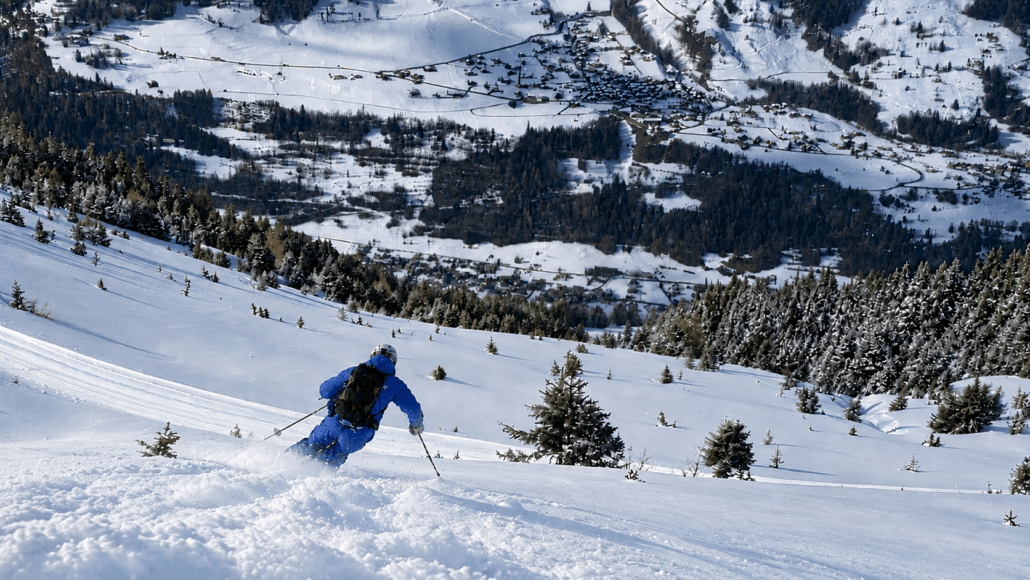
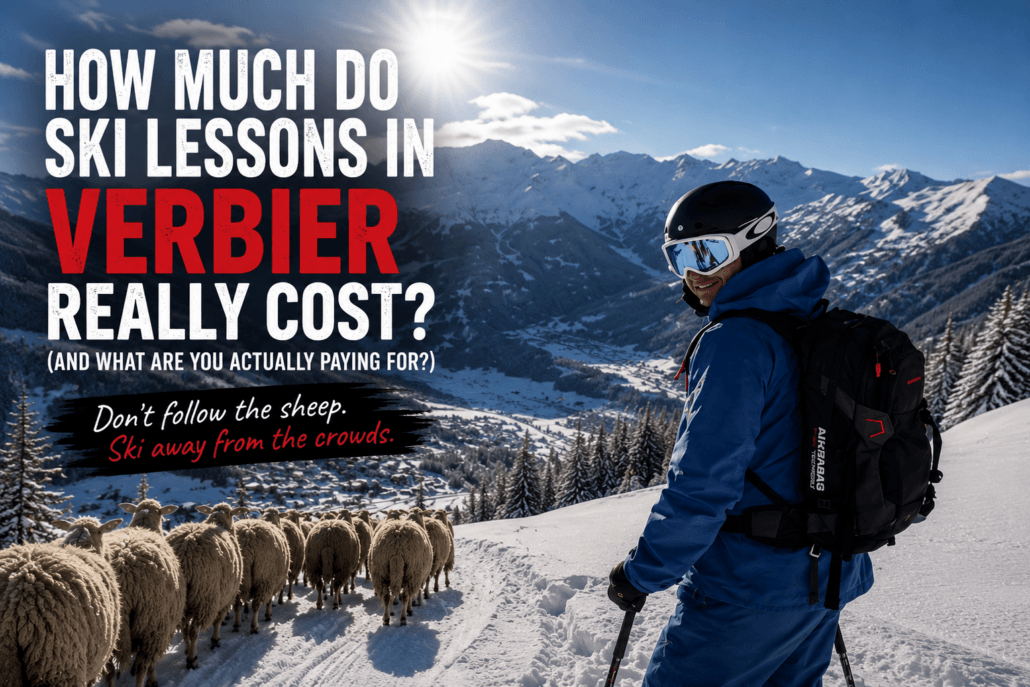
How much do ski lessons cost in Verbier? Skier overlooking Verbier with the message "Don't follow the sheep" highlighting the value of local knowledge and private ski lessons.

A private ski instructor’s local knowledge helps you avoid the crowds, find the best snow and make the most of your Verbier ski holiday.

“How much do private ski lessons cost in Verbier?”

It’s one of the questions I’m asked most often. The answer is easy enough. Depending on the time of year and who you book with, expect to pay somewhere between CHF 450 and CHF 800+ per day.

But that’s the wrong question.

The real question is: What are you actually paying for?

If you’re flying your family over from the USA, staying in a chalet, buying lift passes, hiring skis and eating out every day, you’ve probably invested well over CHF 10,000 in your holiday. Then people spend hours comparing instructors to save CHF 50. Personally, I think that’s getting your priorities slightly the wrong way round.

Your instructor is probably the one person who has the biggest influence on your holiday. They decide where you ski, how much you improve, how much time you spend queueing, where you stop for lunch and whether you discover the real Verbier or simply follow everyone else.

You Are Paying for Decisions

People often think ski instruction is someone skiing in front of you shouting the occasional technical tip over their shoulder. If only it were that simple.

A good instructor is making hundreds of decisions every day. Which side of the mountain has the best snow? Where is the wind coming from? Which lifts are already backing up? Will the south-facing slopes be perfect after lunch? Should we head towards Bruson before everyone else realises it’s skiing brilliantly? Should we ski Mont Fort today, or is today one of those days when everyone heads there simply because it’s the highest point in the 4 Vallées?

Most clients never even notice these decisions. They just know they’ve had an incredible day.

Don’t Follow the Sheep

This is probably my biggest piece of advice to anyone skiing Verbier.

Don’t follow the sheep.

Every morning you see it happen. Hundreds of skiers all heading towards Tortin, Mont Fort and the big-name runs because someone in the chalet recommended them, they’ve seen them on Instagram or they’ve read that skiing from Mont Fort is a rite of passage.

So off they go.

Like sheep.

Twenty minutes later they’re standing shoulder to shoulder in a queue before squeezing into a packed cable car, surrounded by a wonderful cocktail of expensive aftershave, damp ski jackets and stressed-out skier body odour.

By the time they finally reach the top they’ve spent almost as much time queueing as skiing.

Meanwhile, we’re often skiing in completely the opposite direction. Not because Mont Fort or Tortin aren’t fantastic. They absolutely are. But timing is everything.

Sometimes the best decision you can make in Verbier is simply to ski away from the sheep.

A reverse in direction, a quieter chairlift or heading to Bruson while everyone else is fighting over the main bowls can completely transform your day. By lunchtime you’ve often skied twice as much terrain, found better snow and wondered where everyone else disappeared to.

That’s not luck.

That’s local knowledge.

Local Knowledge Is Worth Paying For

Verbier isn’t a resort you master after looking at a piste map over breakfast. It’s a huge mountain that changes every day. Wind, snowfall, temperature, visibility, school holidays, lift queues and even the direction of the sun all influence where the best skiing will be.

On paper, two instructors may have similar qualifications. In reality, one may have spent twenty winters skiing these mountains almost every day.

Knowing which run softens first in the sunshine. Knowing which lift develops a queue at exactly the wrong moment. Knowing when to leave an area before everyone else arrives. Knowing which mountain restaurant still feels like old Verbier.

These aren’t things you’ll find on Google.

That’s experience.

The Cheapest Lesson Can Become the Most Expensive

Everyone likes saving money.

But skiing isn’t always the place to do it.

Imagine spending CHF 12,000 on your family’s ski holiday and then choosing your instructor simply because they’re CHF 75 cheaper.

If you spend half the week standing in queues, skiing busy pistes and never discovering some of Verbier’s best terrain… was it really a saving?

Probably not.

The right instructor gives you something you’ll never get back.

Time.

Time spent skiing instead of queueing.

Time spent discovering instead of searching.

Time enjoying your holiday instead of wondering where to go next.

Ski Schools or Independent Instructors?

Verbier has some excellent ski schools.

It also has some exceptional independent instructors.

The biggest difference is often continuity.

I sometimes jokingly call it ski school roulette.

You might have one instructor on Monday, someone different on Tuesday and another by Thursday. Sometimes you’ll keep the same instructor all week. Sometimes you won’t.

Having one instructor throughout your holiday makes a huge difference. They understand your skiing, your confidence, your family and your goals. Every day builds naturally on the previous one.

Independent instructors also tend to be more flexible. Fancy starting at 10.00 after a leisurely breakfast? Want to finish early because you’ve booked the spa or promised the children hot chocolate in the village? No problem.

Your lesson fits around your holiday.

Not the other way round.

One thing visitors often don’t realise is that genuinely independent instructors in Verbier operate within a professional framework. They should be appropriately registered, insured and authorised to work independently. As a visitor, you shouldn’t have to understand the Swiss system or work out who’s operating correctly.

That’s one of the reasons I created Roddy’s Little Black Book.

Every instructor I recommend has been carefully selected, not only because they’re excellent teachers, but because they’re properly established to work independently in Verbier. It gives clients confidence before they even click the booking button.

Is a Full Day Worth It?

People often ask whether they should book three hours or a full day.

If you simply want to improve your skiing, a shorter lesson can work perfectly well.

If you want to experience Verbier properly…

Book the full day.

The mountain stops becoming a timetable and starts becoming an adventure.

We ski where the snow is best.

We stop for lunch when it suits us.

If conditions change, we change with them.

There’s no panic because the lesson finishes at midday.

One of the biggest advantages of skiing with an independent instructor is flexibility. You’re not tied to fixed lesson times. Fancy starting at 10.00 after breakfast? Perfect. Need to finish early for the spa or après-ski? That’s fine too.

Your holiday shouldn’t revolve around someone else’s timetable.

The lesson should fit around your holiday.

So What Are You Really Paying For?

You’re paying for experience.

You’re paying for judgement.

You’re paying for local knowledge.

You’re paying for someone who knows when not to ski the famous runs.

You’re paying for someone who knows where the sheep are heading… and deliberately takes you somewhere better.

When you look back on your holiday, you probably won’t remember exactly what your instructor cost.

You’ll remember skiing perfect snow while everyone else queued.

You’ll remember discovering a mountain restaurant you would never have found on your own.

You’ll remember that magical run at the end of the day when the mountain was almost empty.

You’ll remember laughing because somehow you always seemed to be where everyone else wasn’t.

That’s what you’re really paying for.

Ready to Ski Away from the Sheep?

If you’re planning a trip to Verbier this winter, don’t leave your ski lessons until the last minute.

Whether you’re looking to improve your technique, explore the hidden corners of the 4 Vallées or simply make the most of an expensive ski holiday, choosing the right instructor is one of the best investments you’ll make.

If you’d like to ski with me, you can Book Your Verbier Ski Lessons directly through my booking page.

If I’m already fully booked, take a look at Roddy’s Little Black Book. It’s my personally curated network of elite independent ski and snowboard instructors in Verbier. Every instructor has been carefully selected for their professionalism, local knowledge and personal approach to teaching.

Whoever you choose…

Don’t follow the sheep!

Continue Reading

If you found this article helpful, you might also enjoy:

Why Booking a Ski Instructor Early in Verbier Makes a Bigger Difference Than Booking Early Flights

Tropical beach hero image illustrating the importance of booking Verbier ski lessons early when planning a winter ski holiday.

Many skiers spend months planning flights and accommodation. The best Verbier ski holidays often start by booking the right instructor early.

Why Booking Ski Lessons Early Makes a Bigger Difference Than Booking Early Flights

It’s probably over 35°C where you’re reading this.

Maybe you’re walking barefoot along a beach, leaving footprints in the sand with an ice cream or a cold drink in your hand. After this week’s extraordinary European heatwave, with another summer heat dome sitting over much of Europe, skiing is probably the last thing on your mind. Ironically, this is exactly when many of the best Verbier ski holidays begin. Not because people are booking flights or choosing a chalet. Those can usually wait. They’re booking the people who will shape their entire week on the mountain.

Every autumn I start receiving the same email.

“Our chalet is booked, the flights are organised, the children are excited… do you have any availability during February half term?”

Sometimes I do. Quite often I don’t.

The funny thing is that families will spend hours comparing airlines, researching Geneva transfers and debating whether to stay closer to Médran or Savoleyres. Yet the one decision that can have the biggest impact on the entire holiday is often left until the very end.

In my experience, booking the right ski instructor early makes a much bigger difference than booking your flights six months in advance.

Nobody Remembers Their Flight

Think back to your best ski holiday. You probably don’t remember which airline you flew with or where you were sitting.

What you remember are the ski days. The powder morning when everything clicked. The run that looked terrifying on Monday but felt easy by Friday. The laughs on the chairlift. Lunch on a sunny terrace. Watching your children suddenly ski with confidence.

Nobody comes home talking about seat 14A on the flight to Geneva. They remember the skiing.

Verbier Is Bigger Than Most Visitors Expect

Every winter I meet visitors who underestimate just how big Verbier and the 4 Vallées really are.

Many North American skiers arrive expecting something similar to a large American resort. Instead they discover four linked valleys, multiple villages and an enormous amount of terrain.

The first couple of days can disappear simply working out how the mountain fits together.

Which sectors ski best after fresh snow? When is it worth heading to Bruson? Which lifts get busy? Where are the quieter runs? What’s the quickest way back without skating across half the mountain?

These are the things local knowledge answers immediately.

A good instructor doesn’t just improve your technique. They help you unlock the mountain itself.

The Best Instructors Book Up First

The reality is that the best independent instructors rarely begin winter with an empty diary.

Many of my regular clients book next season before they’ve even left Verbier. By the time autumn arrives, Christmas, New Year and February half term are often already heavily committed.

Every season I receive enquiries from families who have already invested thousands in flights, accommodation and lift passes, only to discover that their preferred instructor has been booked for months.

It’s never a disaster and there are usually excellent alternatives.

But the earlier you plan, the more choice you have.

That’s particularly true if you’re looking for an experienced independent instructor rather than joining a large ski school. Both have their place, but they offer very different experiences.

Ski Lessons Aren’t Just for Beginners

This is probably the biggest misconception in skiing. Some of my favourite clients are already excellent skiers.

They don’t book lessons because they can’t ski. They book because they want to ski better.

Sometimes that’s powder skiing. Sometimes it’s steeper terrain. Sometimes it’s simply ironing out a few bad habits that have been there for years.

Others just want to spend a week skiing with somebody who knows the mountain inside out and can help them discover parts of Verbier they would never have found on their own.

Even after all these years, Verbier still teaches me something new every winter. That’s one of the reasons I still love skiing here.

Families Benefit More Than Anyone

Families are often the biggest winners when lessons are organised early. The right instructor doesn’t just help the children. They transform the whole holiday. Your children improve faster. Mun and dad can relax. Everyone spends less time worrying about where to ski next and more time enjoying the mountain together. That’s especially true during February half term when demand for children’s lessons is at its highest. Planning early means you have the best chance of finding the instructor who suits your family, rather than simply taking whoever happens to have space.

Start Planning While Everyone Else Is Thinking About Summer

It probably feels slightly ridiculous reading about skiing while you’re sitting on a beach or trying to stay cool during another European heatwave. But experienced Verbier visitors know this is exactly when winter planning quietly begins.

Flights will usually still be available. There will almost certainly be another chalet.

Finding the instructor you really wanted becomes much harder once autumn arrives.

The people who get the most from Verbier aren’t usually the luckiest.

They’re simply the ones who planned their skiing as carefully as they planned everything else.

If Winter 2026/27 is already on your radar, now is the perfect time to start thinking about your skiing. Whether it’s private lessons, children’s coaching, off-piste adventures or simply making the most of your week, booking early gives you the widest choice.

You can usually find another flight.

You can often find another chalet.

Finding the right ski instructor at the last minute is much harder.

The best ski holidays don’t happen by accident. They usually begin months before the first snow falls.

Verbier Snow Prediction Winter 2026–27

Verbier Snow Prediction Winter 2026-27 featuring powder skiing in Verbier, snowberries, wasps and Roddy Willis's annual long-range snow forecast.

The Roddy Willis Snow Forecasting System returns for Winter 2026-27, combining snowberries, wasps, Super El Niño and a healthy dose of optimism to predict another epic Verbier winter.

Super El Niño Joins the Roddy Forecasting System

If you are a regular reader of my Verbier ski blog, you will know that every summer I attempt the impossible and predict the coming winter’s snowfall in Verbier.

The tradition started back in 2010 and has gradually evolved into one of the Alps’ least recognised but most entertaining long-range forecasting systems. Over the years the model has incorporated snowberries, wasps, woolly caterpillars, onion skins, mountain folklore, Hurricane Florence, record-breaking heatwaves and various observations that most meteorologists would probably dismiss immediately.

Remarkably, some of these predictions have worked surprisingly well.

The underlying theory has remained remarkably consistent. Whenever I see unusual weather somewhere in the world, I find myself asking the same question.

Where has all the water gone?

Back in 2018 I was watching Hurricane Florence push vast quantities of water across the Atlantic. In 2022 I was writing about record-breaking European heat and wondering where all that missing rainfall had gone. This year, parts of Portugal have already recorded temperatures approaching 40°C before summer has properly started, Europe is once again experiencing exceptional warmth and weather experts are discussing the possible influence of a Super El Niño.

The newspapers tell us this is climate change, while weather experts talk about ocean temperatures, atmospheric rivers and changing weather patterns. My question remains much simpler.

Where has all the water gone?

Because water does not simply disappear.

All that heat means more evaporation. Warmer oceans mean more moisture in the atmosphere. More moisture means more energy, and more energy tends to create more extreme weather. Sometimes that energy arrives as floods. Sometimes it arrives as storms. And sometimes, when winter finally takes hold over the Alps, it arrives as snow.

Potentially a lot of snow.

Looking Back At Verbier Winters

After nearly four decades skiing in the Alps and more than twenty years in Verbier, I have seen winters that arrived late, winters that never seemed to stop snowing and winters where entire months disappeared beneath successive storm cycles.

The biggest winters all seem to have one thing in common. They are usually preceded by weather patterns somewhere else that make everybody stop and pay attention.

Nobody can accurately predict snowfall six months in advance. If they claim they can, they are probably selling something. But history suggests that unusual weather often has a habit of reappearing somewhere else later in the system.

Which brings us back to Summer 2026.

A New Addition To The Forecasting Model

Every year the forecasting system evolves.

Previous indicators have included snowberries, wasps and various forms of mountain folklore. This year I am adding a new variable.

Super El Niño.

Combined with record early summer temperatures across Europe, it has pushed the my Forecasting Model and the needle is heading into the Snowpocalypse territory.

Whether this is meteorology or complete nonsense remains to be seen.

My Official Forecast

After extensive research, several cups of green tea and at least three minutes of serious thought, I can now reveal my official prediction for Winter 2026–27.

It is going to be massive. Not just good. Massive.

Powder days stacked one after another. Storm cycles arriving exactly when we need them. Endless photos of snow-covered chalets appearing on social media while people back home stare sadly at their office windows.

At the moment I appear to be the outlier. While everyone else is talking about heatwaves, drought and climate records, I am busy predicting one of the biggest winters in recent memory.

By February, however, after a few major storm cycles have rolled through the Alps, I fully expect everyone to explain why it was obvious all along.

What If I’m Wrong?

One of the great advantages of publishing long-range snow forecasts in summer is that most people forget the details by spring.

If Winter 2026–27 turns out to be average, we shall simply focus on the excellent skiing, beautiful scenery and memorable days in the mountains.

If it turns out to be huge, however, I would appreciate everyone remembering exactly where they heard the prediction first.

Need A Powder Guide?

If Winter 2026–27 turns out to be as big as I’m predicting, there is going to be a lot of snow to explore.

Whether you are looking for private ski lessons, off-piste coaching, mountain adventures or simply want to discover more of Verbier with a local expert, I’d be delighted to help.

Get in touch via the contact page and let’s start planning your winter before everyone else realises I was right.

Why Americans With an Epic Pass Should Ski Verbier

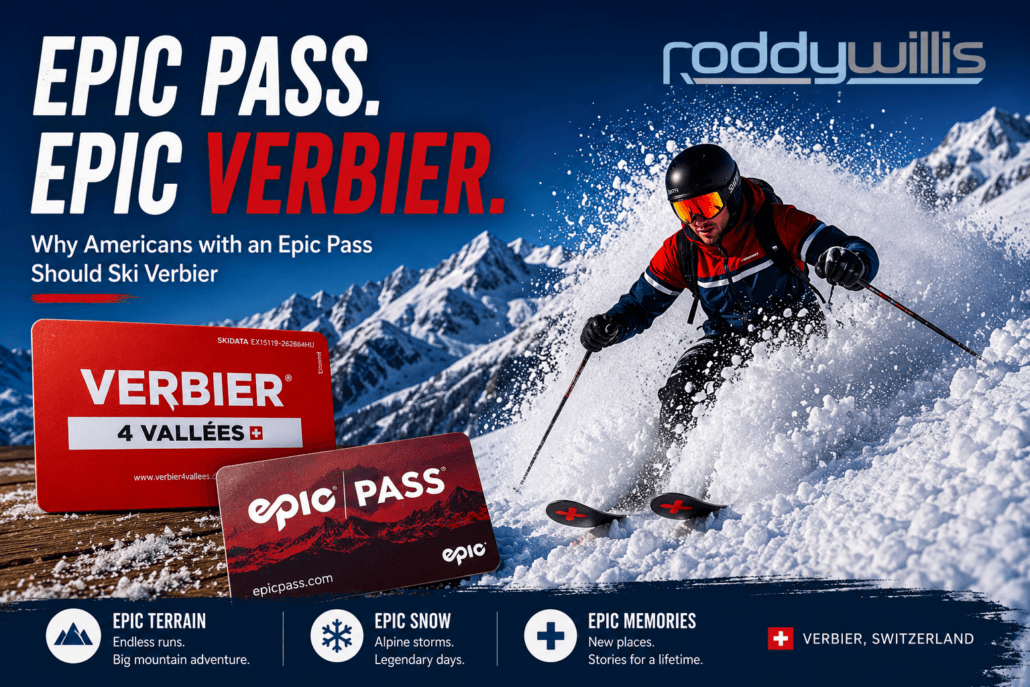
Epic Pass and Verbier 4 Vallées ski passes with powder skiing in Verbier, Switzerland

The Epic Pass partnership has helped introduce more American skiers to Verbier and the Swiss Alps.

Why Americans With an Epic Pass Should Ski Verbier

A few years ago, most American skiers would probably not even have considered skiing in Switzerland.

Europe felt complicated. Expensive. Difficult to organise. The idea of navigating trains, transfers, foreign ski systems and different mountain cultures seemed like a lot of effort compared to simply flying to Colorado or Utah.

That has changed very quickly.

The growth of passes like the Epic Pass has suddenly opened the door to European skiing for a huge number of American skiers. And one resort in particular keeps appearing on people’s radar.

Verbier.

And once you ski here, it is very easy to understand why.

The Epic Pass Now Gives Access to Switzerland’s Largest Ski Area

One of the biggest developments in recent years has been the partnership between the Epic Pass and Verbier 4 Vallées.

For many Americans, that suddenly changes the maths of a European ski trip completely.

Instead of paying huge daily lift ticket prices on top of flights and accommodation, many skiers already have mountain access included within a pass they were already planning to buy anyway.

Epic Pass and Epic Adaptive Pass holders currently receive five consecutive days of skiing in Verbier 4 Vallées, while Epic Local Pass holders also receive five consecutive days with some restricted dates applying.

The partnership gives American skiers access to Switzerland’s largest ski area, with more than 410 kilometres of pistes, 80 lifts and terrain rising to 3,330 metres at Mont Fort.

The area is so extensive that many visitors leave without ever skiing every sector of the mountain despite spending a full week in resort.

Verbier Feels Completely Different From Most American Resorts

Most Americans arriving in Verbier for the first time notice the atmosphere almost immediately.

Verbier is not a purpose-built ski resort. It grew from a traditional Alpine farming community into one of the world’s great ski destinations, and that history still shapes the character of the village today.

Old wooden chalets. Serious mountains. Long lunches. Tiny mountain restaurants hidden on ski pistes. People skiing hard all day before somehow still finding energy for après-ski afterwards.

The mountain itself also feels very different from many North American ski areas. In the US, many resorts are designed heavily around piste grooming and controlled skiing environments. Verbier has that too, but that is not really what made the resort famous.

Verbier became legendary because of its steep terrain, huge off-piste possibilities, serious freeride culture, massive vertical and a mountain that still feels raw and wild.

For advanced skiers especially, it can feel like discovering skiing all over again.

The Terrain Is Bigger Than Many Visitors Expect

A lot of first-time visitors underestimate how large the 4 Vallées ski area actually is.

The linked terrain connects Verbier, Bruson, Nendaz, Veysonnaz, Thyon and La Tzoumaz, spreading across multiple valleys and mountain sectors with huge variety between them.

One minute you are skiing high alpine terrain beneath Mont Fort. The next you are cruising through tree runs in Bruson or skiing long rolling pistes above Nendaz.

And unlike many North American resorts, the skiing often feels far less repetitive because the terrain changes so dramatically across the mountain.

One of the best examples is Bruson. While many visitors spend their entire week around Verbier and Mont Fort, locals know that Bruson often offers quieter slopes, excellent tree skiing during bad weather and some of the best snow preservation in the region. It is exactly the sort of place first-time visitors often miss without local knowledge.

Verbier Is Not a Beginner Resort

This is something worth being honest about. Verbier is an incredible resort, but it can also surprise people.

Some pistes are steeper than Americans expect from marked runs. Visibility can change quickly. Route finding matters more. Off-piste terrain is serious high mountain terrain. Even some of the famous itinerary runs are not controlled pistes in the way many North Americans imagine.

That is partly why people love it. The mountain feels more natural, more adventurous and less sanitised. But it also means local knowledge makes a huge difference.

Off-Piste in Verbier Is a Big Part of the Culture

One thing many American visitors notice very quickly is how much off-piste skiing is simply part of normal ski culture in Verbier.

People are not only skiing powder on storm days. They are skiing off-piste almost every day somewhere on the mountain.

That might mean hidden snow pockets days after snowfall, steep couloirs, glacier routes, tree skiing in Bruson or long freeride descents towards Tortin.

But this is also where visitors need to understand that avalanche safety in Europe works differently from many North American resorts. Large parts of the mountain remain natural terrain and avalanche equipment and proper local knowledge matter enormously.

Many American skiers are surprised to discover that the European concept of off-piste skiing works very differently from the in-bounds and out-of-bounds systems they are used to at home. If you would like to understand more about that, read my guide: Why American Skiers Get Caught Out in Europe.

Americans Often Underestimate Alpine Logistics

One of the biggest mistakes first-time visitors make is assuming a European ski trip works exactly like a North American one.

It doesn’t.

And that is part of the charm.

But logistics matter more than people realise.

Airport Transfers Matter

Most visitors fly into Geneva, and one of the biggest surprises for many Americans is how easy the journey onwards to Verbier actually is.

Switzerland’s rail system is superb. From Geneva Airport you can travel directly towards Le Châble train station, the lift station directly below Verbier, without needing to hire a car or organise an expensive private transfer.

From Le Châble you simply step onto the gondola and continue straight up into Verbier.

During the winter season, the Verbier Express train even operates direct services from Geneva Airport to Le Châble on selected weekends, making the journey even easier.

Driving from Geneva to Verbier usually takes around two to two and a half hours depending on traffic and weather, although Saturday transfer traffic during busy weeks can be heavy.

For many first-time visitors, the train journey itself becomes part of the Alpine experience, with spectacular scenery as you travel deeper into the mountains.

Where You Stay Matters More Than You Think

Verbier is spread across different levels of the village.

A chalet that looks close on a map may involve buses, walking uphill in ski boots or complicated morning logistics.

Choosing the right area can completely change how smooth the holiday feels.

Restaurant Culture Is Different

Lunch in the Alps is a proper part of the ski day.

People sit outside on terraces. A hard day’s skiing followed by a long mountain lunch and then either skiing home or heading straight into après-ski is perfectly normal.

Booking restaurants in advance during busy weeks matters far more than many Americans expect.

Verbier Has a Certain Energy

Verbier Tourism’s current slogan is Pure Energy and, for once, tourism marketing has actually got it right.

There is an energy in Verbier that is difficult to explain until you experience it for yourself. Partly it comes from the mountain, partly from the freeride culture and partly from the mix of locals, seasonnaires and returning visitors who keep coming back year after year.

Strong skiers come here because there is always another line to ski, another sector to explore and another challenge waiting somewhere on the mountain.

For many visitors, one trip to Verbier turns into a habit that lasts decades.

Why Strong Skiers Tend to Love Verbier

There are plenty of beautiful ski resorts in Europe.

But Verbier has a certain energy to it.

The mountain attracts strong skiers, mountain guides, freeriders and ski instructors who have spent decades exploring the terrain.

There is always another route, another line and another hidden corner of the mountain waiting to be discovered.

For skiers who enjoy exploring, improving and skiing challenging terrain, Verbier can become seriously addictive.

Winter 2026/27 Brings Major Improvements Across the 4 Vallées

The mountain continues to evolve.

Winter 2026/27 will see the completion of the new Savoleyres lift project, one of the biggest infrastructure investments in Verbier for decades. The project replaces the old Savoleyres gondola with a faster, more efficient connection between Verbier and La Tzoumaz, making access across this side of the mountain significantly easier.

At the same time, the Nendaz–Veysonnaz sector will benefit from a new high-speed six-person chairlift serving Greppon Blanc. The new installation replaces several older lifts, improves skier flow and reduces journey times across this important link within the wider 4 Vallées ski area.

Together, these projects represent a major investment in Switzerland’s largest linked ski area. Visitors arriving in Winter 2026/27 will find it easier than ever to explore the full extent of the 4 Vallées, from Verbier and Bruson to Nendaz, Veysonnaz, Thyon and La Tzoumaz.

Stay Longer Than You Normally Would

One thing I often tell American visitors is this.

Do not come to Europe for four days.

A European ski trip works much better when you slow down slightly.

Seven to ten days is ideal.

You have time to settle into the village, understand the mountain, ski different sectors properly, enjoy mountain lunches, explore neighbouring areas and actually experience Alpine ski culture rather than simply rushing through it.

The Difference Local Knowledge Makes

Verbier is one of those resorts where local knowledge genuinely changes the experience.

The right restaurant. The right lift timing. The quieter routes. The best snow after a storm. The sectors to avoid in bad visibility. The hidden mountain restaurants. The easier logistics for families.

These things make a huge difference to how the week actually feels.

And many first-time American visitors simply do not realise how much easier the experience becomes when somebody helps them understand how the resort works properly.

Planning Your First Verbier Ski Trip With an Epic Pass?

I regularly help American visitors discover Verbier for the first time, whether that is through private ski lessons, performance coaching, off-piste guiding or simply helping people understand how to get the best out of the mountain.

If you are thinking about using your Epic Pass in Europe next winter, feel free to get in touch.

A little local knowledge in Verbier can completely change the experience of the trip.

And if you are looking for trusted local recommendations beyond ski lessons, from instructors and mountain guides to restaurants, accommodation and services, take a look at Roddy’s Little Black Book or get in touch through the contact page. Or read my reviews here.


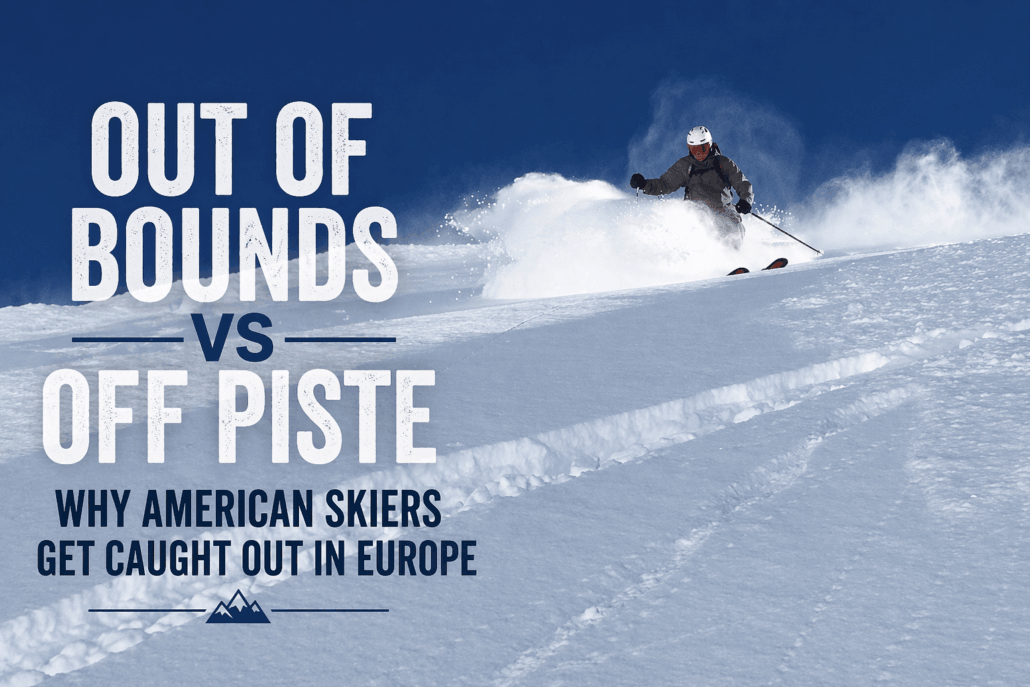
In Bounds vs Off-Piste: What Americans Often Misunderstand in Verbier

Skier skiing off piste powder near piste in Verbier Savoleyres Switzerland

The biggest mistake American skiers make in Verbier? Assuming that if it’s accessible, it’s safe.

Why American Skiers Get Caught Out in Verbier (And How to Avoid It)

Every winter I see exactly the same thing happen in Verbier.

An American skier arrives after a fresh snowfall, rides up Attelas or La Chaux, looks across at an untouched powder field sitting right beside the piste and thinks, “Nobody has skied that yet.”

A few minutes later they are standing knee-deep in snow above unfamiliar terrain wondering how they ended up there.

The interesting thing is they haven’t ducked a rope, ignored a warning sign or deliberately gone looking for trouble. They’ve simply made one very American assumption, and it is probably the single biggest misunderstanding I see from first-time visitors to the Alps.

The Assumption That Catches People Out

Most North American ski resorts operate within clearly defined resort boundaries. Avalanche control, ski patrol and terrain management create an environment where skiers naturally assume that if a run is open, somebody has assessed the surrounding terrain and made it reasonably safe.

To leave that managed environment usually requires a conscious decision. You duck a rope, pass a boundary marker or deliberately head into terrain that is clearly marked as outside the ski area.

The message is simple and easy to understand.

Inside the boundary is managed. Outside the boundary is your responsibility.

Many American skiers arrive in Verbier expecting exactly the same system because that is what they have known for years. The problem is that the Alps generally work very differently.

Europe Works Differently

In Verbier, as in much of Europe, the resort’s primary responsibility is the marked pistes. Once you leave those pistes, even by only a few metres, you are often outside the controlled environment.

There may be no rope. No warning sign. No fence. No ski patroller standing there telling you to turn around.

Instead, there is often a beautiful powder field that looks like a natural extension of the ski area.

To somebody who has grown up skiing Colorado, Utah or British Columbia, it can look exactly like in-bounds powder.

But it isn’t.

That distinction catches a surprising number of visitors out every winter.

The Verbier Trap

What makes Verbier particularly deceptive is how accessible so much of the off-piste terrain appears.

From the lifts you can see powder fields stretching away in every direction. You can watch skiers making turns directly beneath the chairlifts. Around Attelas, Tortin and the bowls visible from Mont Gelé, the terrain often looks like a seamless continuation of the piste network. In reality, areas such as Tortin are classic examples of terrain that can appear deceptively straightforward while still demanding good judgement, the right conditions and an understanding of mountain hazards. I explored this in more detail in my article on why many visitors underestimate Tortin.

Then there are the tracks.

Visitors see dozens of existing tracks crossing a slope and assume somebody has checked it, or that it must be safe because other people have already skied there.

Unfortunately, tracks tell you very little. They simply tell you that somebody else went first.

Every winter there are visitors who discover that difference the hard way.

The Mindset Shift

One of the biggest differences between skiing in North America and skiing in the Alps is not technical ability, equipment or even avalanche knowledge.

It’s mindset.

European skiers generally don’t assume the mountain has been made safe for them once they leave the piste. They understand that skiing off-piste is an active decision that comes with additional responsibility.

They think about avalanche conditions. They look at visibility. They consider how weather has changed during the week and how that affects the snowpack. Most importantly, they recognise that responsibility has shifted from the resort to them.

That change in thinking is often more important than any avalanche transceiver or safety gadget.

Why Skiing With a Local Makes Such a Difference

This is one of the reasons I often recommend that visitors spend at least a day with a high-level local instructor when they first arrive in Verbier. A good day of Verbier ski lessons often teaches visitors far more about the mountain than a week of exploring alone.

People sometimes think they are simply hiring somebody to improve their technique, but the real value often goes far beyond that.

A good instructor helps you understand how the mountain works. They know which slopes are skiing well, which areas are best avoided, where the snow has been preserved and how conditions have evolved over the previous days.

They help you make better decisions while also helping you become a better skier.

Most visitors are amazed by how much terrain suddenly opens up once somebody explains where to go, when to go there and what to avoid.

Verbier is a huge mountain and it can take years to really get to know it.

Ski Instructors and Off-Piste Skiing in Verbier

Another surprise for many visitors is that independent ski instructors in Verbier can legally take clients off-piste and ski touring, provided they hold the appropriate Swiss qualifications and registrations.

Not all instructors working in the Alps have the same qualifications, permissions or local knowledge, which is why I always encourage visitors to do a little homework before booking.

The right instructor can make a huge difference to both your progression and your enjoyment of the mountain. Check out my Verbier off piste ski lessons page

What About Mountain Guides?

Mountain guides also play an incredibly important role in the Alps.

For glacier travel, mountaineering objectives, rope work, ski alpinism and more technical adventures, a mountain guide is often the perfect choice.

However, that is not necessarily what most visiting skiers are looking for.

Most people simply want to ski great snow, improve their technique, explore more of the mountain and do so with somebody who understands local conditions. For that type of experience, a highly qualified local instructor is often exactly the right fit.

Different mountain professionals provide different services and choosing the right one depends entirely on the experience you want from your trip.

My Advice for First-Time Visitors

If this is your first visit to Verbier, keep things simple.

Stay on marked pistes if you are unsure. Don’t assume that terrain beside a piste is controlled. Don’t blindly follow tracks and don’t confuse accessibility with safety.

One of the things that makes the Alps so special is the freedom they offer. The terrain feels vast, open and adventurous in a way that many visitors have never experienced before.

That freedom is part of the magic, but it also comes with responsibility.

The Bottom Line

The biggest mistake American skiers make in Verbier is assuming that a lack of ropes means a lack of danger.

In North America, resort boundaries often define safety. In Verbier, marked pistes generally define safety.

Understanding that one difference can completely change how you approach the mountain and will almost certainly make your trip safer and more enjoyable.

The good news is that once you understand how the Alps work, you’ll discover some of the most rewarding skiing anywhere in the world.

If you’re planning your first trip to Verbier and would like help making the most of the mountain, whether that’s improving your skiing, exploring some of Verbier’s legendary off-piste terrain or simply understanding how everything works, feel free to get in touch. You can learn more about my background, qualifications and private ski lessons in Verbier on the Roddy Willis homepage, or I can point you towards one of the elite independent instructors featured in Roddy’s Little Black Book.

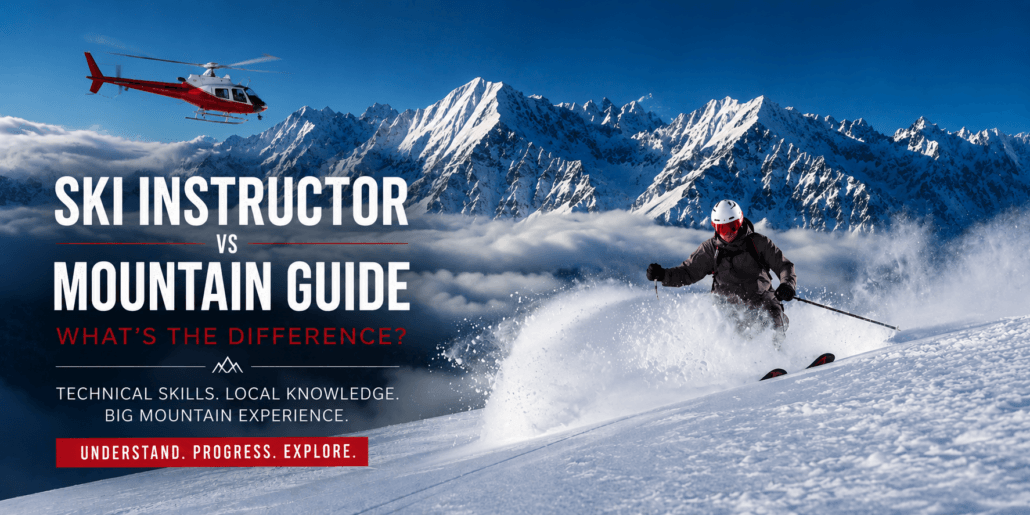
Ski Instructor vs Mountain Guide in Verbier: What’s the Difference?

Private ski instructor skiing powder in Verbier with helicopter above the Swiss Alps

Technical skiing, mountain knowledge and high-end alpine experiences in Verbier.

Ski Instructor vs Mountain Guide in Verbier: What’s the Difference?

One of the most common questions visitors ask in Verbier is whether they need a ski instructor or a mountain guide, and honestly the answer is often misunderstood. Many people assume guides are automatically for advanced skiers while instructors are mainly for beginners, but in reality some of the strongest all round skiers in Verbier work as independent ski instructors rather than guides. The difference between the professions is not really about who is the “better skier”. It is about terrain, objectives and professional specialisation.

What a Ski Instructor in Verbier Actually Does

This surprises many international visitors because a highly qualified ski instructor in Switzerland can do far more than teach beginners on pistes. Top level instructors regularly coach advanced carving, steep skiing, powder skiing, moguls, freeride technique, ski touring and private off piste ski lessons in Verbier, as well as mountain safety. Importantly, they do not just take you skiing somewhere, they actively improve how you ski it.

A ski instructor’s job is based around movement analysis, technical performance, confidence building and helping clients become stronger skiers in all conditions. For many visitors to Verbier, especially strong skiers wanting to improve in powder or difficult terrain, that is actually far more valuable than simply being shown where to go.

Swiss mountain professions have become increasingly regulated over the last decade, particularly following the introduction of federal legislation covering mountain activities involving elevated levels of risk. The result is that different mountain professionals now operate within clearly defined legal and professional frameworks depending on terrain, qualifications and the nature of the activity involved.

Under the framework of the Loi sur les Activités à Risque, qualified ski instructors are legally permitted to operate in a wide range of off piste and ski touring terrain depending on their qualifications, training and local authorisations. This is why many experienced independent instructors in Verbier regularly work far beyond normal piste skiing.

Where Mountain Guides Become Essential

Mountain guides operate in a different professional sphere and the key distinction is not simply “off piste”. In Switzerland, the professional distinction between ski instructors and mountain guides is primarily based around the type of terrain and mountain environment involved rather than a simple division between “on piste” and “off piste”.

It is terrain involving glaciers, crevasse rescue, ropes, harnesses, mountaineering equipment or ski alpinism that changes the framework. If your objective involves genuine alpine mountaineering terrain or glacier travel, then a mountain guide is absolutely the correct professional.

Examples around Verbier could include the Rosablanche glacier routes, ski mountaineering peaks, technical couloirs requiring rope work or longer hut to hut touring adventures. In these situations alpine mountaineering expertise becomes necessary because the focus moves beyond skiing technique and into mountain travel, glacier safety and technical alpine risk management.

The Confusion Around Off Piste

This is where many visitors misunderstand the difference between instructors and guides because a ski instructor can absolutely ski off piste with clients. In fact many independent instructors in Verbier spend most powder days doing exactly that.

There is a huge amount of lift accessed off piste terrain in Verbier that highly qualified ski instructors legally and professionally ski every winter with clients, and the important distinction is whether the terrain requires mountaineering techniques, glacier travel or equipment associated with alpine alpinism.

I wrote previously in more detail about the Swiss framework surrounding off piste activities and the distinction between different mountain professions in Verbier in this article about off piste regulations in Verbier.

Many visitors are surprised to discover that some of the strongest all round skiers in Verbier actually work as instructors. Their professional focus is simply different. Instructors specialise in skiing performance, ski technique and helping clients improve across all terrain and snow conditions, while mountain guides specialise in alpine terrain management and mountaineering environments.

In many situations the limiting factor is not accessing the terrain, but having the technical ability and confidence to ski it well. That is where elite instructors become incredibly valuable.

Why Many Advanced Skiers Choose Instructors

A lot of strong skiers are not actually looking for an expedition. They want to ski powder better, handle steeper terrain with more confidence, stop fighting the skis, ski longer without fatigue and finally understand how good skiers make difficult snow look easy.

That is where a top instructor can completely transform a ski holiday because the best instructors in Verbier combine technical coaching, local knowledge and mountain strategy all together. You are not simply following somebody downhill, you are improving all day long without really noticing it.

For many advanced skiers the real breakthrough is not skiing more extreme terrain, but learning how to ski challenging terrain properly, efficiently and with confidence.

Verbier Is a Technical Mountain

Verbier is not always an easy mountain to unlock alone because the terrain is large, complex and often intimidating for visitors skiing it for the first time. A good local instructor removes huge amounts of wasted time and uncertainty by knowing where the snow stayed cold, which sectors work best in flat light, how to move efficiently across the mountain, which lift lines to avoid and how to match terrain to conditions and skier level. The famous Tortin sector offers some of the most iconic skiing in Verbier, but visitors often underestimate how complex it can be to navigate efficiently without local knowledge.

That local knowledge becomes incredibly valuable, especially on shorter holidays where every day matters.

The Future of High End Ski Trips? Both

For some clients the perfect setup actually involves both an instructor and a guide. An instructor may help build technical confidence, powder skills and movement during the first part of the week before a mountain guide steps in later for a specific alpine objective, ski touring or heliskiing day.

Honestly this is where I think ski holidays are heading at the higher end of the market because a client might spend three or four days skiing with a private instructor in Verbier first, not simply warming up physically but working on techniques, powder, steeper terrain confidence and all mountain skiing before a bigger mountain experience at the end of the trip.

By the time the heliskiing day arrives the client is skiing better, moving more efficiently and enjoying the experience far more rather than simply surviving it. That combination of technical coaching followed by a big mountain objective can create an incredible progression across a single ski holiday and the two professions, although different, can complement each other extremely well when used properly.

If a heliskiing day, ski touring objective or bigger mountain adventure is part of your future plans, feel free to get in touch. Through my network of local instructors and mountain guides, I can help organise the right preparation, coaching and guiding to ensure you get the most from the experience.

Final Thoughts

The idea that ski instructors are only for beginners is completely outdated in modern skiing because many of the best skiers on the mountain are instructors. For most visitors to Verbier, especially those wanting to become better skiers rather than simply survive difficult terrain, an elite independent instructor is often the most valuable investment they can make in their holiday.

Because skiing great terrain is one thing.

Learning how to ski it properly is something else entirely.

And a little bit more!

If you are planning a ski trip to Verbier and want to improve your skiing while exploring the mountain properly, working with an elite independent instructor can completely change the experience. Whether your goal is powder skiing, steeper terrain, ski touring or preparing for bigger mountain objectives later in the week, the right coaching makes everything feel easier, smoother and far more enjoyable.

From technical coaching and off piste progression to bespoke mountain weeks and future heliski adventures, Verbier is a mountain that rewards local knowledge and expert guidance. If you would like to see what previous clients have said, you can read some of my recent reviews here.

Explore private ski lessons in Verbier or discover Roddy’s Little Black Book of elite independent instructors or book your Verbier ski week here.

What Happened to the Six-Blanc Chairlift Project in Bruson?

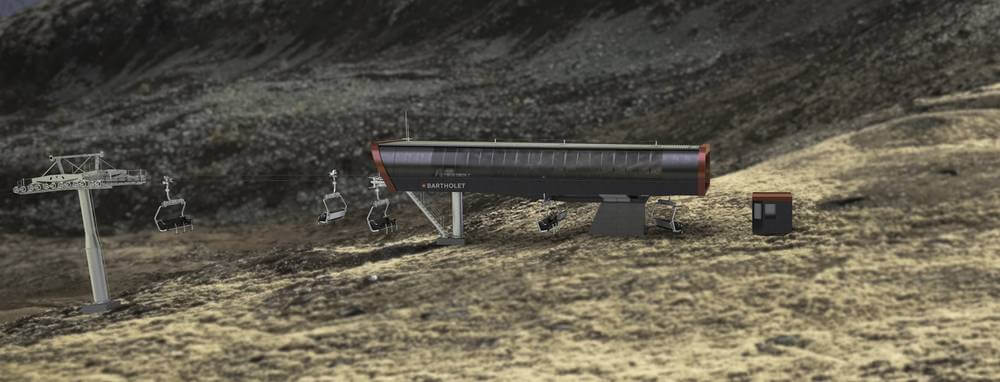
Artist rendering of the planned Pissevache Chargerat six-seater chairlift project in Bruson by Bartholet Maschinenbau AG.

Concept image of the proposed Pissevache Chargerat detachable 6-seater chairlift in Bruson. © Bartholet Maschinenbau AG

What Happened to the Six-Blanc Chairlift Project in Bruson?

For a while, the rumours about a new Six-Blanc chairlift in Bruson felt slightly vague. The sort of thing skiers talk about over coffee in Le Châble before disappearing back into Alpine mythology a few weeks later.

Apparently not.

Digging into it properly, the project was actually surprisingly advanced.

Under the technical project name “Pissevache Chargerat”, the proposed lift already appeared publicly on ski infrastructure databases as a planned detachable 6-seater chairlift built by Bartholet BMF. The published specifications included a projected construction date of 2026, a lift length of 1524 metres, 463 metres of vertical rise and a planned capacity of 1600 skiers per hour linking Pissevache towards Chargerat and Grand Tsai.

In other words, this was clearly a real project.

And not just buried quietly online either.

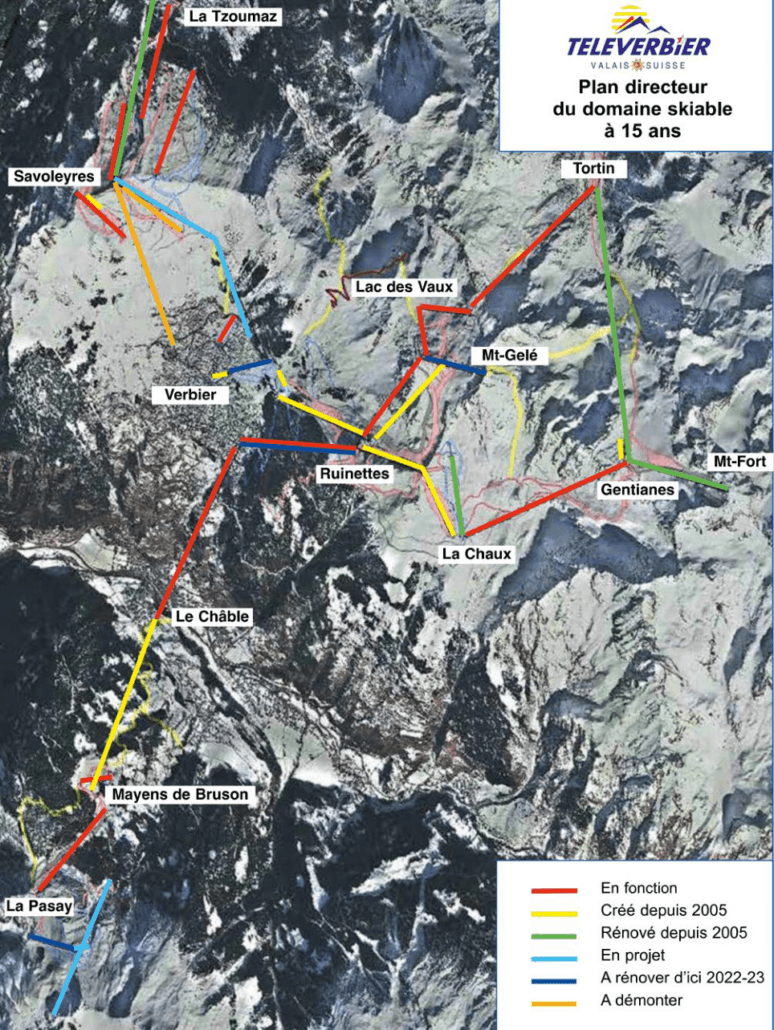
Older Téléverbier masterplan documents also appear to show the proposed connection marked out in light blue as part of the resort’s longer-term infrastructure vision for the mountain.

Which is why it came as quite a surprise when Téléverbier recently confirmed to me directly that the project has now been “entièrement mis en attente” – completely put on hold.

No timeline. No construction dates. No indication if or when it may return. Honestly, that feels slightly difficult to understand.

Because Bruson Is Quietly Becoming One of the Best Parts of Verbier

For years Bruson was treated as Verbier’s quieter neighbour. Slightly slower. Slightly less fashionable. Somewhere people disappeared to on bad weather days.

Now? On many days it is arguably the better ski experience altogether.

When the queues start building around Médran, Attelas and Tortin, more and more good skiers quietly drift across towards Bruson. Not because they are avoiding skiing, but because they are usually heading towards better skiing.

The snow around Pasay, Six-Blanc and Grand Tsai often stays good long after the main sectors have been tracked into oblivion. The trees provide contrast when the high mountain disappears into flat light. And somehow the whole place still feels slightly calmer and less frantic than the main Verbier lift system during busy periods. It still feels like skiing rather than logistics.

Which is exactly why the Six-Blanc project made so much sense.

This was not some giant vanity project or another flashy cable car for Instagram drone footage. It was simply a smart infrastructure upgrade in a sector of the mountain that genuinely deserves investment. Because the skiing itself in Bruson has never really been the issue.

Once beyond La Pasay, the mountain can still feel slightly disconnected compared to the faster-moving main sectors above Verbier. The proposed Six-Blanc lift would likely have transformed that by improving circulation towards Chargerat and Grand Tsai while making the whole Sur le Six area far easier to lap efficiently.

Simple things. But important things.

Especially as more and more resorts across the Alps continue investing heavily in lift infrastructure while parts of Verbier still feel strangely stuck somewhere around 2004 on busy powder mornings.

Téléverbier ski area masterplan showing proposed future lift developments including the planned Six-Blanc / Pissevache Chargerat connection in Bruson.

Téléverbier 15-year ski area masterplan showing the proposed Six-Blanc / Pissevache Chargerat lift connection in Bruson. Credit: Téléverbier

But There May Be Another Reason

There is also another layer quietly sitting behind the project which may partly explain why things have stalled.

Increasingly, local discussion around the proposed lift has centred on potential conservation restrictions in the terrain around Tête de la Payanne if the development ever moved forward.

That matters because the terrain above Bruson is not just another lift-access sector. It is also one of the most popular freeride and ski touring areas in the region, used heavily by mountain guides, ski instructors, ski tourers and strong off-piste skiers precisely because it still feels relatively wild and accessible. And that creates a difficult balance.

Because while improved lift infrastructure would undoubtedly spread skiers more effectively across the mountain, there also appears to be concern that future development could eventually come with stricter access limitations into some of the surrounding terrain.

In Switzerland, tensions between freeride access, ski touring freedom, wildlife protection and resort development are becoming increasingly common. Which means the Six-Blanc story may actually be about something much bigger than a chairlift.

The Strange Part

What makes the pause even more curious is that the project actually fitted remarkably well with Téléverbier’s own published long-term strategy.

Their masterplan talks repeatedly about improving skier distribution, modernising infrastructure and adapting the ski area to changing mountain conditions. And honestly, Bruson naturally solves many of those problems already.

More shelter. More trees. Better visibility during storms. Better snow preservation. Less concentrated skier traffic.

If you were designing the future of skiing in Verbier from scratch today, you would probably build more around Bruson, not less.

Of course there may be perfectly valid reasons why the project has been paused. Alpine lift projects are never simple. Permits, environmental concerns, politics and investment priorities all play their part.

But from the outside, it still feels surprising that one of the most logical infrastructure projects in the ski area has quietly disappeared just as Bruson is becoming more important than ever. Not every improvement in skiing needs to involve building another headline project to Mont Fort. Sometimes the smartest investments are simply the ones that make the mountain better and speed up uplift.

If you want to discover why so many local skiers quietly disappear towards Bruson on storm days and powder mornings, book a private ski lesson with Roddy Willis and explore the terrain around Pasay, Six-Blanc and Grand Tsai for yourself.

Whether the new lift ever arrives or not, the skiing over there remains some of the most interesting, snow-sure and underrated terrain in the 4 Vallées.

Book Private Ski Lessons in Verbier

Why Good Skiers Still Take Lessons in Verbier

Advanced skier skiing powder snow in Verbier during a private coaching session

Good technique on the piste works everywhere, especially when conditions become more challenging off piste.

Why Good Skiers Still Take Lessons in Verbier

One of the biggest misconceptions in skiing is that lessons are only for beginners.

In reality, many of the people who book private ski instructors in Verbier already ski very well. Some have skied for decades. Some spend every winter skiing places like Aspen, Jackson Hole or Whistler. Others regularly ski off piste, tour, or simply spend a lot of time on snow every season.

Verbier has a habit of exposing technique very quickly.

Powder, bumps, steep terrain and variable snow reveal technical flaws far faster than smooth pistes ever will. Quite often clients arrive saying they want to improve their off piste skiing, but the real issue is usually core technique. Good piste skiing works everywhere.

Sometimes the fastest way to improve off piste skiing is actually to go back onto the piste for a while, clean up the fundamentals properly, then test those movements again in powder, bumps or more difficult terrain. Rinse and repeat throughout the week.

Good skiing is usually about balance, timing and subtle movements, not forcing the ski or fighting the mountain. The best skiers rarely look tense or overworked. They look calm, balanced and efficient.

And that is where Verbier becomes such a good teacher.

You can ski steep groomed pistes first thing in the morning, ski bumps after lunch when the legs are getting tired, find powder in Bruson during a storm cycle, then head out onto long off piste itineraries later in the day. Few resorts expose both good and bad skiing quite as quickly as Verbier.

Conditions also change constantly here. One run can go from soft powder to chopped snow to bumps to wind affected hardpack within a few hundred metres. Suddenly skiing that felt strong back home starts to feel inefficient and tiring.

That is usually the point where good skiers realise there is another level to skiing.

Skiing More Does Not Always Mean Improving

A lot of experienced skiers plateau without really noticing it.

They ski more every year, but often repeat the same movement patterns over and over again. There is an old saying that practice makes perfect, but in skiing it is usually more accurate to say that perfect practice makes perfect.

If someone rehearses the same inefficient movements for years, those habits simply become more deeply ingrained.

Strong skiers are often extremely good at compensating for technical weaknesses through confidence, speed, fitness or athleticism, which can hide the problem for a long time.

On smooth groomed pistes you can often get away with it.

But once skiers leave the piste and move into powder, bumps, steeper terrain or difficult snow, those weaknesses get exposed very quickly.

Difficult snow has a way of telling the truth.

Very often the changes needed are surprisingly small. A subtle adjustment in balance, timing or pressure management can completely change how a skier feels on the mountain.

Verbier Is One of the Best Classrooms in the Alps

One of the reasons Verbier produces such strong skiers is because the mountain demands adaptability.

The terrain gives immediate feedback.

If your balance is slightly back, Verbier lets you know quickly. If your timing is off in chopped powder, you feel it instantly. If your stance becomes defensive on steep terrain, the mountain exposes it fast.

That is exactly why advanced skiers often improve so much here.

The variety of terrain and snow conditions accelerates learning far faster than skiing the same comfortable pistes every day.

And improvement in skiing is not only about technique. Terrain choice, tactics, rhythm, confidence and energy management become increasingly important once you move into more advanced skiing.

Modern Ski Coaching Is Not What Many People Think

A lot of people still picture ski lessons as large groups skiing slowly behind an instructor on easy pistes.

Private coaching in Verbier is usually very different.

For advanced skiers it becomes much more about performance, adaptability and efficiency than traditional “lessons”.

One morning might be spent carving perfect corduroy. The next could be powder, bumps or steep terrain in difficult conditions.

Video analysis can help. So can terrain choice, pacing and tactical skiing.

A good coach is also constantly managing the level of challenge. If the terrain is too easy, progress slows because the skier is not being pushed enough. But if the terrain is too difficult, fatigue, tension and frustration start taking over and learning drops away very quickly.

The sweet spot is usually somewhere in the middle. Challenging enough to stimulate progress, but controlled enough that the skier still feels balanced, calm and able to adapt.

Sometimes the right decision is not another run. One of the most overlooked parts of skiing well is knowing when to stop for five minutes, reset mentally, let the body recover and allow the brain time to process what has just been learned.

A short coffee break or pause in the middle of the day is often about far more than physical rest. Quite often skiers come back calmer, smoother and skiing better afterwards. Sometimes that small reset is the missing piece.

Very often the goal is not to make someone ski like a race coach or a ski exam candidate. The goal is simply to help them ski the mountain better in real conditions.

The best skiers usually look calm, not aggressive.

Small Changes Often Unlock Big Terrain

One of the most satisfying parts of teaching advanced skiers is seeing how quickly things can change.

A skier who has struggled in powder for years suddenly becomes more centred and starts skiing naturally through the snow. Someone who avoids bumps suddenly realises they can ski them calmly instead of fighting them.

Quite often the issue is not bravery or fitness.

It is simply that the skier has never been shown the right movements, timing or tactics for that terrain.

And in Verbier that can completely change how someone experiences the mountain. A few small technical changes can suddenly make runs like the Chassoure-Tortin itinerary feel controlled and enjoyable rather than something survived with burning legs and a racing heart.

There is actually a lot of truth in the old saying that better skiers have more fun. Not because skiing needs to look perfect, but because confidence and good technique open up far more of the mountain.

Powder becomes less intimidating. Steep pistes feel calmer. Difficult snow stops feeling like survival skiing.

The better you move on skis, the more freedom you have to enjoy the mountain properly.

The Goal Is Not Perfect Technique

Perfect technique only really exists in ski exams and social media clips.

Not every turn is going to be perfect. The key is having strong core technique to return to and, most importantly, to keep moving. The way to the bottom of the slope is one turn after another, not stopping after one mistake and letting the mental side take over.

If a skier stops mentally after one bad turn, that is often all they remember. But one slightly messy turn in a sequence of twenty or thirty good turns becomes almost irrelevant in the overall performance.

Snow changes. Visibility changes. Legs get tired. Conditions evolve throughout the day.

The goal is not robotic skiing. It is skiing that flows naturally from one turn to the next.

Every skier also has their own movement patterns and personality. We all have a recognisable walk, and in many ways we all have a recognisable way of skiing too.

Good coaching is not about turning someone into a textbook robot from a ski instructor manual. It is about helping skiers move more efficiently while still skiing naturally in their own way.

The goal is to become adaptable. To ski difficult snow with more confidence. To move more efficiently. To waste less energy. To stay calm when conditions become challenging.

And perhaps most importantly, to enjoy more of the mountain.

That is often the real difference between an average ski holiday and a truly memorable one.

Simply book some Verbier ski lessons to start making changes to your skiing.

Booking Ski Lessons in Verbier: Independent Ski Instructors vs Ski Schools

Two skiers in Verbier beside signs comparing independent ski instructors and ski schools with snowy Swiss Alps in the background.

Understanding the difference between independent ski instructors and ski schools in Verbier can completely change your ski holiday experience.

Booking Ski Lessons in Verbier: Independents vs Ski Schools

Most people booking ski lessons in Verbier assume one simple thing.

If they are paying premium prices, they are skiing with a highly qualified professional instructor.

The reality is often very different.

Verbier is one of the most expensive ski resorts in the world, yet many visitors have little idea how the Swiss ski instruction system actually works, who is legally allowed to teach, or how some large ski schools structure their staffing behind the scenes.

This matters because the difference between skiing with a fully qualified career instructor and skiing with somebody in their very first season can completely change your holiday.

And in Verbier, where private ski lessons regularly cost hundreds of Swiss francs per day, many visitors are surprised to discover how little transparency there sometimes is around qualifications and experience.

Not All Ski Lessons in Verbier Are Equal

Many tourists assume booking through a large ski school automatically guarantees the highest level instructor available.

It does not.

In Switzerland there is a huge difference between:

  • A fully qualified Swiss instructor
  • An instructor operating independently with legal authorisation
  • A trainee instructor
  • A seasonal instructor working under a ski school umbrella
  • A gap year instructor completing their first season

To most clients though, everybody wears the same uniform.

That is where the confusion begins.

What Is the Swiss Brevet Fédéral?

The highest professional ski instructor qualification in Switzerland is the Swiss Brevet Fédéral.

This is not a one week course or a quick seasonal certification.

It typically takes years of technical training, avalanche education, teaching assessments, examinations, professional development, and mountain experience to achieve.

The qualification is recognised internationally as one of the highest level ski instructor certifications in the world.

Importantly, instructors holding the Brevet Fédéral can legally operate independently in Switzerland.

Many independent instructors in Verbier, including instructors connected through Roddy’s Little Black Book, hold this level qualification or equivalent high-level international recognition.

The Umbrella System Most Clients Never Hear About

This is the part many visitors do not realise.

In the Canton of Valais, where Verbier is located, independent ski instructors need recognised professional qualifications and cantonal authorisation to legally operate independently.

Professional instructors operating independently legally in Valais are registered through MontagnePro, the official professional mountain sports register used within the canton.

However, ski schools can legally employ or umbrella instructors who may still be working toward full qualification status.

This can include:

  • Trainee instructors
  • Seasonal staff who have completed a 5 day in house training
  • Gap year instructors
  • Instructors with limited teaching rights
  • Instructors still completing qualification pathways

Under the ski school structure, supervision systems can allow one fully qualified Brevet Fédéral instructor to oversee several less qualified instructors working within the organisation.

There is nothing inherently wrong with instructors gaining experience.

Every professional instructor started somewhere.

The issue is transparency.

Many clients paying premium Verbier prices assume they are automatically skiing with a highly experienced, fully qualified local instructor, when in reality they may be skiing with somebody in the very early stages of their professional career.

The Gap Year Instructor Question Nobody Talks About

Every winter, large numbers of young skiers arrive in the Alps on instructor training programmes and gap year courses.

Many are excellent skiers, enthusiastic, hard working, and passionate about the mountains.

Some will eventually become fantastic instructors.

But after relatively short training periods, many are quickly placed into commercial ski school systems and sold to the general public at full private lesson prices.

A family paying premium Swiss resort prices may unknowingly be skiing with somebody in their very first season of teaching.

Again, that does not automatically make them a bad instructor.

But there is a major difference between:

  • A career instructor with 20 winters of teaching experience in Verbier
  • And somebody who completed a short instructor course a few weeks earlier

From the client perspective though, the pricing often looks almost identical.

This is why experienced skiers and quality-conscious clients increasingly ask direct questions before booking:

  • What qualification does the instructor actually hold?
  • How many winters have they taught?
  • Do they know Verbier properly?
  • Will this be the same instructor every day?
  • Are they independently qualified or registered in Valais?

Why Independent Instructors Are Often Different

Most top independent instructors in Verbier did not leave ski schools because they could not get work.

Usually the opposite is true.

Many independents have:

  • Decades of teaching experience
  • The highest level qualifications
  • Long-term returning clients
  • Deep local mountain knowledge
  • More flexibility to personalise lessons
  • Greater freedom to adapt to weather, snow, and client goals

Independent instructors also rely heavily on reputation and repeat business.

That changes the experience completely.

There is no anonymous instructor allocation system deciding who teaches you that morning.

You know exactly who you are booking.

Why Experience Matters So Much in Verbier

Verbier is not an easy ski resort.

It is a vast mountain area with constantly changing snow conditions, complex terrain, busy lift systems, variable weather, and huge differences in snow quality depending on aspect and altitude.

A highly experienced local instructor is not simply teaching ski technique.

They are also making decisions all day long about:

  • Where the best snow will be
  • Which lifts to avoid
  • How to manage confidence
  • Which terrain suits the conditions
  • Where crowds will build
  • How to safely progress ability levels
  • How to adapt the day to energy, weather, visibility, and mountain traffic

That kind of local knowledge only comes from years working in the resort.

How To Check If an Instructor Is Properly Registered in Verbier

Most visitors do not realise they can check ski instructor qualifications and professional registration before booking. If you want to understand more about what actually makes a great instructor in Verbier, you can also read our guide on how to choose a ski instructor in Verbier.

Because Verbier is located in the Canton of Valais, many independently operating ski instructors can be verified through MontagnePro, the official professional mountain sports register for Valais.

This allows consumers to check whether an instructor is professionally registered to operate independently within the canton.

It is important to understand though that instructors working under a ski school structure may not necessarily appear individually in the same way as independently registered professionals.

That is why asking direct questions before booking still matters.

Simple Checklist Before Booking Ski Lessons in Verbier

1. Ask for the instructor’s full name

Not just the ski school name.

2. Ask what qualification they actually hold

Specifically ask whether they hold the Swiss Brevet Fédéral or another equivalent internationally recognised professional qualification.

3. Ask whether they are independently registered in Valais

Many independent instructors operating in Verbier are registered through MontagnePro.

4. Ask who will actually teach you

Some clients book one instructor online and are allocated somebody different later.

5. Ask how many winters they have taught in Verbier

Local knowledge in Verbier matters far more than many visitors realise.

Why More Clients Are Choosing Independent Instructors

This shift is already happening quietly across premium Alpine resorts.

More experienced skiers and luxury travellers increasingly want:

  • Direct access to the instructor
  • Clear qualifications
  • Consistency year to year
  • Personal recommendations
  • Privacy
  • Local knowledge
  • A more personalised experience
  • Greater trust in who they are skiing with

This is one reason many top independent instructors in Verbier are booked well in advance during Christmas, New Year, February half term, and Easter holidays.

The Difference Between Cheap and Expensive Lessons Is Not Always Price

Two private ski lessons in Verbier can cost almost exactly the same amount.

One may be delivered by:

  • A highly experienced full-certification instructor with 20 years in Verbier

Another may be delivered by:

  • Somebody teaching their very first paying clients

From the outside, many visitors cannot see the difference.

That is why asking questions matters.

Roddy’s Little Black Book

Roddy’s Little Black Book was built around a simple idea.

Connect clients directly with carefully selected independent instructors personally known and trusted within Verbier.

Not a giant ski school. Not an anonymous booking system. Not whoever happens to be free that morning.

Just experienced independent professionals with strong qualifications, deep local knowledge, and years of mountain experience.

For many families, strong skiers, and visitors investing heavily in a Verbier holiday, that difference matters far more than they initially realise.

Final Thoughts

Verbier has some of the best ski instructors in the world.

But not all ski lessons are equal.

The important thing is not whether somebody wears a ski school jacket or works independently.

The important thing is transparency, qualifications, experience, and who is actually teaching you.

The more clients understand how the system works, the easier it becomes to make informed decisions and get the level of ski experience they are truly paying for.

If you are planning a ski holiday in Verbier and want a more personalised approach with carefully selected independent instructors, Roddy’s Little Black Book offers a different alternative to the traditional ski school model.

What a Week With a Private Ski Instructor in Verbier Actually Looks Like

Private ski instructor skiing with clients in Verbier on a sunny winter day

What a Week With a Private Ski Instructor in Verbier Actually Looks Like

Most people book a ski holiday to Verbier around the hotel, the flights, or who is coming on the trip.

The skiing part often gets figured out later.

But the reality is that the difference between a good ski holiday and a great one is usually how well you use the mountain. That is where having a private ski instructor changes everything. Not just for beginners, but for expert skiers as well.

And in Verbier there is also another difference many international visitors do not realise at first. Booking an independent private instructor is often a very different experience from simply booking through a large ski school.

Many of the top independent instructors in Verbier have spent decades teaching in the resort, hold the highest level international qualifications, and work privately because it allows them to offer a far more personalised experience. More flexibility, more consistency, and usually a much closer relationship with the clients they ski with throughout the season, often becoming great friends and skiing together season after season.

A week with a private instructor in Verbier is not seven days of ski drills, endless repetition, and being told to “bend ze knees!”. It is more like having someone who knows the mountain inside out, understands how to improve your skiing without overcomplicating it, and quietly removes the stress from the week so you can simply enjoy skiing more, which is surely the reason you are in Verbier in the first place?

How Many Days Do I Need a Ski Instructor or Guide?

I get many overseas clients, particularly from American ski resorts, asking to book “just the first morning” of ski guiding so they can learn the ski area.

What many people do not realise at first is just how enormous Verbier and the 4 Vallées actually are. You could ski full days for a week here and still not properly ski every piste and every sector of the mountain.

If you have travelled all this way, it makes sense to maximise your ski time and your experience on the mountain. The clients who get the most out of Verbier are usually the ones who book their instructor for most, if not all, of the trip. Not because they need constant “lessons”, but because they want to ski the right terrain, avoid wasting time, discover the best parts of the mountain, and simply have a smoother and better ski holiday.

Independent instructors also tend to have the flexibility to adapt the day properly around the client rather than around a rigid ski school schedule. The day does not always have to fit neatly into standard 9 to 12 or 1 to 4 lesson slots. If the weather changes, if the legs are tired, or if conditions are better on the other side of the mountain, the plan changes with it.

Day One: Finding Your Feet

The first morning is normally about settling in.

Maybe you have just arrived from London or New York the night before, the altitude feels different, the boots feel stiff again, and the legs are not quite there yet. Verbier is not the easiest resort to “warm up” in either, so getting onto the right terrain early in the week makes a massive difference.

A good instructor is not just there to talk about ski technique either. They are often quietly helping with dozens of small details that improve the whole week. Helping organise ski rental, checking ski boots are actually fitted properly, sorting avalanche equipment for off piste days, adjusting bindings correctly, or even helping clients avoid heading onto the mountain completely overdressed or underdressed for the conditions.

Small details matter in skiing, particularly ski boots. Many people spend a fortune on a ski holiday and then ski around all week in badly fitted boots that are half done up properly.

A good first day is about getting the body moving again, rebuilding rhythm, and finding confidence. Often by lunchtime people already feel dramatically better than they expected.

This is also where local knowledge starts to matter. Knowing where the snow stayed cold, which lifts get busy first, where to avoid the ski school traffic, and where to ski depending on visibility can completely change the feel of the first day.

A good instructor is also quietly gathering information all morning. Watching how you move, how you react to terrain, where your strengths are, what makes you tense, and adapting the day around that rather than forcing you into some fixed progression system.

By Midweek Everything Starts to Click

Usually around day three the skiing starts to come alive again.

The legs adapt. The timing comes back. Suddenly the pistes that felt steep on day one now feel enjoyable. You stop thinking so much and start skiing naturally again.

This is normally when people start exploring more of Verbier properly. Bruson if the visibility is flat. High mountain routes when conditions are good. Quiet corners of the resort that many visitors never find on their own.

And contrary to what many people think, private ski instruction at this level is rarely about standing still talking about technique all day.

The best coaching normally happens while skiing. Small adjustments. Better tactics. Better line choice. Better timing. Sometimes one small change transforms an entire run.

One of the nice things about skiing with the same independent instructor all week is continuity. The instructor quickly understands how you ski, how you learn, when to push harder, and when to simply enjoy the mountain. By the middle of the week the whole experience starts to feel very natural.

Private ski clients skiing advanced terrain in Verbier with an independent instructor

Powder Days Change Everything

If the weather delivers, the whole week changes gear.

A powder morning in Verbier can either become one of the best ski days of your life or a complete battle depending on where you go and when. Most people follow the crowds. The locals generally do not.

This is where skiing with somebody who understands the mountain properly makes a massive difference. Not just for finding good snow, but for skiing it better and with more confidence.

And contrary to popular belief, you do not need to be an expert freerider to enjoy off piste skiing in Verbier. Many strong intermediate skiers discover they are capable of far more than they thought once somebody shows them how to approach the terrain properly.

A good independent instructor is also not trying to move clients through a system or a progression chart. The focus is entirely on the individual skier, the conditions on that particular day, and creating the best possible experience on the mountain.

It Is Also About the Flow of the Week

One of the biggest differences with private instruction is how smooth the entire week becomes.

You are not standing around waiting for groups. You are not following a fixed plan that ignores weather or conditions. You can stop for lunch when it suits you. Change plans when visibility changes. Ski harder one day and easier the next.

And lunch in the Alps is genuinely part of the experience. For many American clients this is one of the biggest surprises of skiing in Europe. Mountain lunches here are not usually a rushed hamburger eaten in a crowded cafeteria. Long relaxed lunches on sunny terraces are part of ski culture in Verbier.

Proper food, good wine, local cheese, fresh bread, and mountain restaurants that people genuinely look forward to visiting every season.

I have had American clients laughing that they can suddenly eat bread and cheese again in Switzerland without feeling terrible afterwards because so much of the food is fresh, local, and far less processed than what they are used to back home.

Some days lunch might just be a quick coffee because the snow is too good to stop for long. Other days it becomes part of the rhythm of the day. A long lunch at Chez Dany, Le Dahu, or one of the smaller mountain restaurants tucked away from the main pistes.

That flexibility is part of what makes skiing with an independent instructor feel very different from a traditional ski school experience.

For many returning clients it becomes less about “having lessons” and more about having a trusted professional to ski the week with. Someone who knows the resort, understands the conditions, helps with mountain strategy, and quietly improves your skiing throughout the week without making it feel over coached.

The End of the Week

By the final day most people are skiing noticeably better than when they arrived, but more importantly they are normally skiing with far more confidence and far less effort.

That is usually the real goal.

Better rhythm. Better flow. Better understanding of the mountain. And a week that feels properly personalised rather than processed through a system.

Because ultimately the best ski holidays are rarely about just ticking off runs.

They are about skiing the right terrain, in the right conditions, with the right approach, and enjoying the whole experience properly.

And that is very often what a week with an independent private ski instructor in Verbier actually looks like.

Looking Ahead to Winter 2026/27

The best independent instructors in Verbier tend to get booked surprisingly early, especially Christmas, New Year, February half term, and the peak powder periods later in the season.

If you are already thinking ahead to next winter, now is a good time to start planning your dates.

Whether you are looking to improve your skiing, explore more of the mountain, or simply have a smoother and more enjoyable week in Verbier, private ski guiding can completely change the experience.

You have spent a fair whack of cash getting here, so go the extra mile and hire the private instructor for the week as it will massively add value to your holiday.